
You read:
Deep CRM-PRM Integration: Why Shallow Sync Is Not Enough for Partner-Led Growth
Many B2B companies already operate a mature CRM platform and, at some point, decide to build or scale a partner channel. Very quickly, they face a fundamental architectural question:
Should partner management be handled by a dedicated PRM application integrated with CRM, or should CRM itself be extended with PRM capabilities?
This is not a technical detail.
It is a strategic decision that directly affects sales execution, partner trust, data consistency, and long-term scalability.
The Architectural Dilemma in CRM-Driven Organizations
For organizations already using a CRM system – especially Microsoft Dynamics 365 – the decision around PRM usually comes down to two options:
- implement an external, specialized PRM application and integrate it with CRM
- or extend the existing CRM with partner management functionality
At first glance, the second option often looks obvious.
One platform, one data model, one place to work.
But the market is full of mature PRM solutions that promise “native” or “seamless”
integration with CRM systems. This creates confusion and often leads to decisions
that look reasonable in the short term, but become problematic at scale.
What We Mean by PRM in This Article
PRM Has Two Very Different Layers
In practice, PRM always consists of two distinct parts:
- Partner Portal – a partner-facing, external application where partners
register deals, access content, and engage in activities - Internal PRM layer – used by the Partner Management team to define
processes, rules, incentives, approvals, and collaboration with Direct Sales
In this article, when we refer to PRM, we focus only on the internal PRM layer used by Partner Management.
The integration between PRM and the Partner Portal is a different operational topic
and is intentionally out of scope here.
The Most Common False Assumption About CRM–PRM Integration
“If We Sync Core Objects, We Are Integrated”
The most widespread mistake is the belief that integrating a few CRM objects – typically Leads, Accounts, Contacts, and Opportunities – is enough.
This level of integration can support basic reporting in both systems.
But it is fundamentally insufficient for managing real partner-led sales operations.
CRM and PRM are not simple databases.
They are process platforms, each running multiple workflows, approvals, activities, and decision logic – almost always centered around the same end customer.
Shallow object synchronization does not ensure that partner-generated data becomes a logical, complete extension of customer data managed in CRM.
Objects Do Not Create Collaboration
Another false assumption is that shared objects automatically lead to smooth collaboration between Direct Sales and Partner Management.
In reality, teams do not collaborate on records. They collaborate on ownership rules, conflict resolution, prioritization, incentives, and accountability.
Without shared process logic, even perfectly synchronized objects fail to prevent friction.
Who Feels This Problem the Most
CRO, Head of Sales, Board-Level Revenue Owners
This role is responsible for all revenue channels and often makes the final architectural decision.
Shallow integration may provide reports, but it does not provide real control over channel conflicts, partner influence, or pipeline ownership.
Head of Partnerships / Partner Management
Partner Management teams often grow out of Direct Sales and are already deeply familiar with the CRM.
Introducing a separate PRM platform creates a new learning curve, operational silos, and distance from sales decision-making.
RevOps
RevOps teams naturally push for one source of truth.
Fragmented processes across CRM and PRM make performance analysis harder, reduce data quality, and increase manual reconciliation work.
When Organizations Realize the Integration Is Too Shallow
The Same People Must Work in Two Systems
Problems start when Direct Sales, Customer Success, or Partner Management are forced to operate across two integrated but separate platforms.
Context switching, duplicated decisions, and manual coordination quickly degrade efficiency and data quality.
Direct vs Partner Channel Conflicts
Basic object synchronization is not enough to prevent conflicts when both channels engage the same customer.
Without shared logic and real-time context, parallel conversations and ownership disputes become inevitable – and visible to the customer.
Processes Cannot Be Reused Across Channels
As organizations grow, they want to replicate proven sales and marketing processes across channels.
Separate platforms with shallow integration make this impossible, locking each channel into its own evolution path.
Partner-Led Customer Support Scenarios
When partners handle first-line support and the vendor manages escalations, CRM often lacks a full view of the customer.
The result is fragmented communication, slow resolution, and a poor customer experience.
The Most Expensive Business Consequences
Loss of Partner Trust
Channel conflicts directly impact the customer and quickly erode partner confidence.
Once partners stop trusting the vendor’s rules and systems, they reduce engagement, delay deal registration, or avoid investment altogether.
Limited Scalability of the Partner Program
Forced Architectural Rebuild
Poor early decisions often lead to a painful conclusion:
the CRM–PRM setup must be rebuilt as a single platform.
At scale, this means high cost, operational risk, and organizational resistance.
When PRM Should Be Part of CRM
Direct and Partner Sales Co-Exist
If both channels operate in parallel, shared logic and shared ownership rules are critical.
Responsibility for the Customer Is Shared
When sales, partners, and customer success all influence the customer journey, fragmented systems create fragmented decisions.
Long-Term Scalability Matters
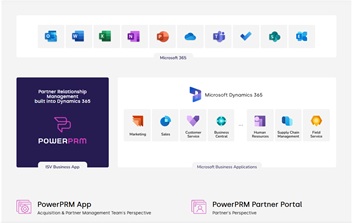
If CRM – such as Dynamics 365 – is a strategic platform, extending it with PRM capabilities reduces future migration risk and protects prior investments.
What Deep CRM - PRM Integration Really Means
Deep integration is not about syncing more objects.
It is about ensuring consistency of data, processes, activities, and customer context in one place for everyone.
Sales, Partner Management, and RevOps operate with the same logic, the same rules, and the same understanding of the customer – regardless of channel.
Final Thoughts
Shallow CRM-PRM integration may work at the beginning. But as partner-led sales grows, it becomes a liability.
For organizations running Dynamics 365 and planning long-term partner-driven growth, PRM is not a separate world. It is a natural extension of revenue operations – and should be treated as such.


